
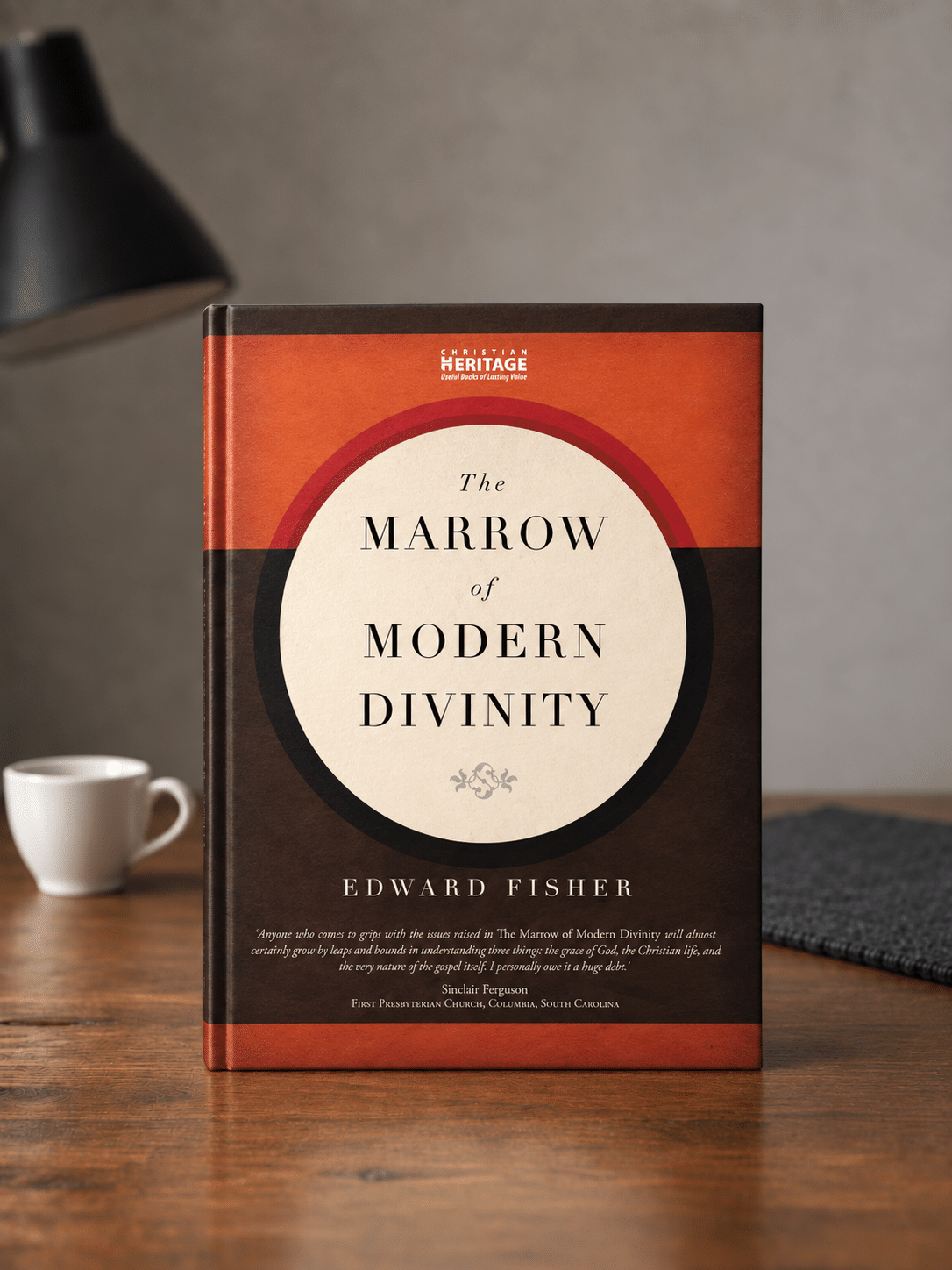
The Marrow of Modern Divinity by Edward Fisher is one of the most important and enduring works in the Reformed tradition on the relationship between law and gospel, grace and obedience, justification and the Christian life.
Written in the form of a dialogue, the book brings together four characters: Evangelista, a Christian minister; Neophytus, a young believer; Nomista, a legalist; and Antinomista, who wrongly concludes that grace makes obedience unnecessary. Through their conversations, Fisher exposes two opposite errors—legalism and antinomianism—and shows how the gospel provides the only true foundation for assurance, holiness, and Christian obedience.
The result is a remarkably practical theological work. Fisher is concerned not merely with defining doctrines, but with helping Christians understand how the free grace of God in Christ relates to faith, repentance, sanctification, and the proper use of God’s law. The book presses readers to distinguish carefully between resting in Christ for acceptance with God and pursuing obedience as the fruit of that acceptance.
This edition includes the extensive explanatory notes of Thomas Boston, whose annotations helped make The Marrow central to one of the most significant theological controversies in eighteenth-century Scotland. It also includes an introduction by Philip Ryken and a historical introduction by William Vandoodewaard, helping readers understand both the book itself and the debates surrounding it.
For confessional Baptists, The Marrow of Modern Divinity is especially valuable because the questions it addresses remain perennial. How should law and gospel be distinguished? What is the relationship between justification and sanctification? How can the free offer of Christ be maintained without weakening the call to holiness? And how should believers pursue obedience without slipping into legalism?
Substantial, searching, and deeply evangelical, The Marrow of Modern Divinity is a classic work for pastors, theological students, and serious Christians who want to understand the gospel more clearly and live out its implications more faithfully.